
The power of student’s international solidarity in relation to Guatemalan student’s occupation of the Universidad de San Carlos(USAC) in 2022
Author
hayleydarsan
Share




The power of student’s international solidarity in relation to Guatemalan student’s occupation of the Universidad de San Carlos(USAC) in 2022
By Hayley Sanchez
Student organizing is a key component of all movements. As we watch mobilizations take place at universities on a global scale, students and community organizers are at the frontlines of protests. There has always been — and will always continue to be solidarity amongst students and their community and communities abroad. Students hold power, as both the learner and the teacher. The ones taking in information and doing the informing. This is why the threat to education has long been used as a strategic tool for control by dictatorships, the far right, and corrupt governments. Education has the power to teach, and students have the power to disperse their knowledge to their communities, leading to collective action and ultimately change as the community becomes aware of the root of their inequalities. Community organizers have long implemented education as one of their tools, as seen through the Black Panther Party’s educational programs, including “liberation schools”, such as the Oakland Community School for young Black people. Movements before and in the present have shown us that through organizing and uniting, otro mundo es posible, another world is possible.
Educational resistance is all too present now, as seen in the nationwide student encampments advocating for the liberation of Palestine and the repercussions they face from the administration and government. Education as a target is seen through the purposeful targeting of universities in Gaza, leaving them in rubble, having been airstrike and bombed, as well as the violence caused by the Israel Occupational Forces (IOF) toward Palestinian professors, students, poets, journalists, and in turn, all educators of society.
Guatemala’s largest and most renowned public university, the University of San Carlos (USAC), was purposefully targeted out of censorship, via a corrupt administrator’s attempt at privatizing it. The USAC has a history of student political action and activism, including martyrs such as Olivero Castañeda. The 2022 student movement at the USAC showcases the power of student collectivism, as they managed to occupy the USAC for over a year. I fortunately had the opportunity to go and meet with student protesters at the USAC on August 16th, 2022. I interviewed Professor Sandra Kolaq who informed me of the history of the USAC: the past and present student protests, why they are protesting, and what’s at risk. Professor Kolaq spoke of the corruption within the university and how the country’s corruption is interconnected. For over a year, students risked their lives camping, living, organizing, and fighting on campus for their right to an education — free of privatization, corruption, and control. I see these students as inspiration for the capabilities of student organizing and the power we hold, especially when we work with the community for the community. I have included songs at the beginning and the end of this interview. The first is “La Chabela,” made for and sung by the USAC students as a chant. In Guatemala protests, it is used to critique the bourgeois and those controlling the country satirically. At the end of the interview, “Los Estudiantes” by Violetta Parra plays, sung by Los Guaraguao, which is a song created during the Nueva Cancion movement in Chile when students rose against dictatorships and political corruption and in support of socialist presidential candidate Salvador Allende. It is a song that honors student activism and organizing, and goes as follows: “Me gustan los estudiantes, que rugen como los vientos, cuando les meten al oido sotanos y regimientos, pajarillos liberatorios, igual que los elementos.” “I like students, who roar like the winds, when cellars and regiments are put into their ears, little liberating birds, just like the elements.”
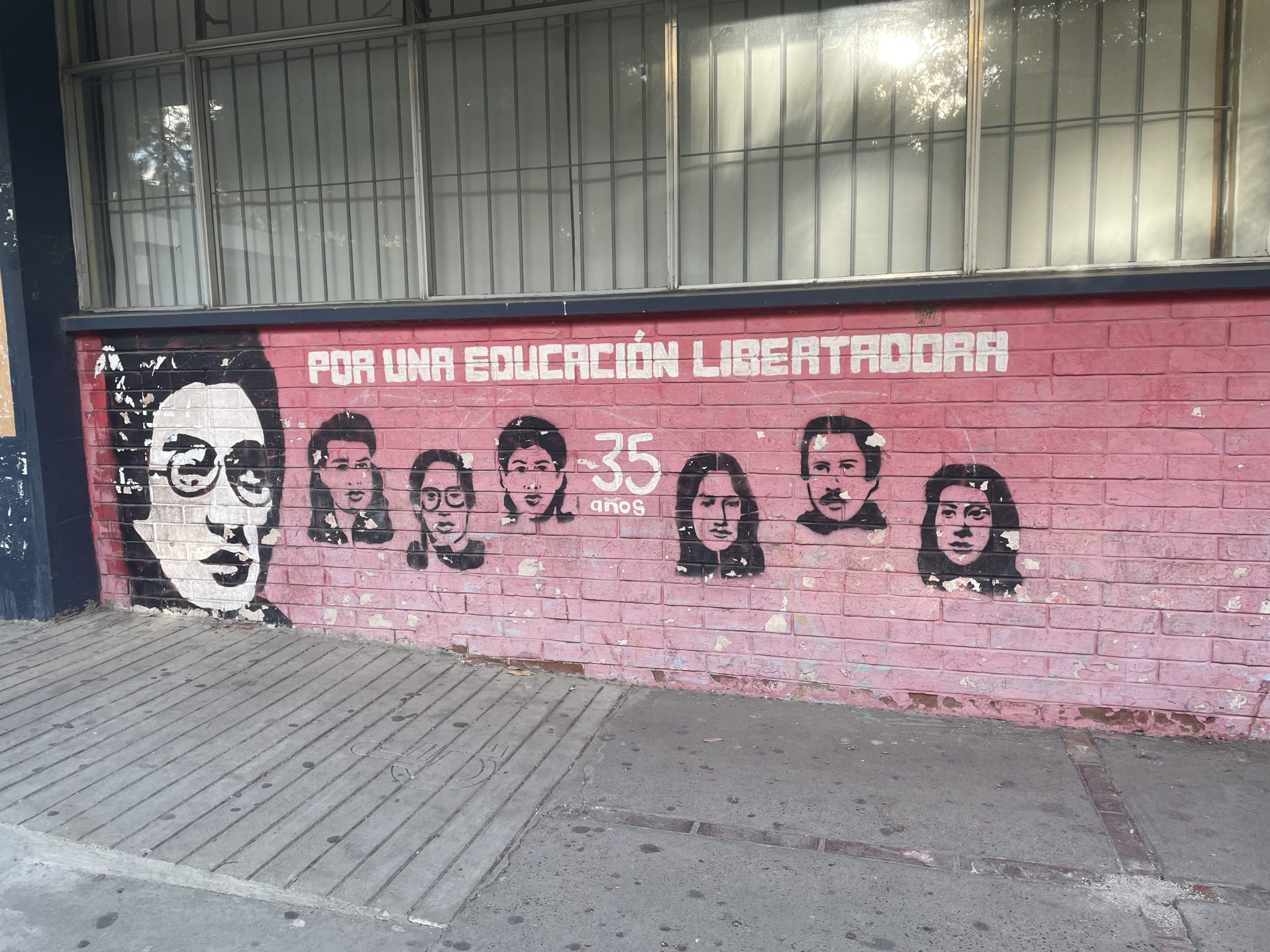
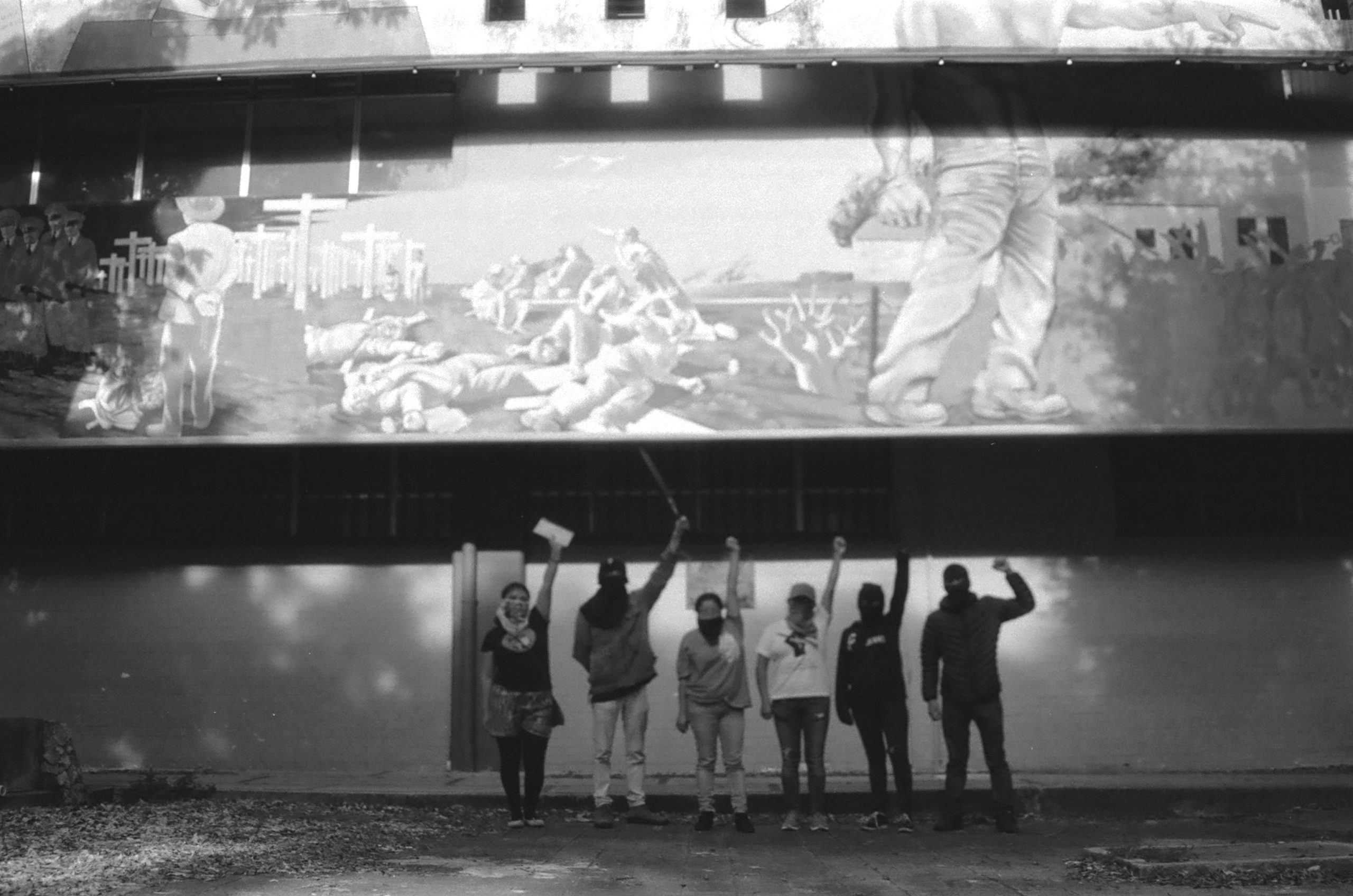
USAC’s unlawfully appointed director, Walter Mazariegos and the Guatemalan government are attempting to erase the University of San Carlos’s history. In September of 2023, they removed murals celebrating student and political martyrs such as Oliverio Castañeda and Rogelia Cruz, as well as internationally recognized revolutionary thinkers and activists. The elimination of these murals silenced students’ histories and their communities, as many of the murals also depicted the Guatemalan Civil War, martyred students, and students’ history, art, words, and beliefs.
Some of the murals included in this article no longer exist and have since been covered up. Their actions are reflective of where the university stands.
I want to keep these students’ stories, Guatemala’s history, and its radical resistance alive by documenting and preserving them. I hope stories like these inspire international solidarity amongst students, as we realize that by coming together change is tangible. When we learn from one another, those who’ve fought before us will inspire those who come after, keeping the history that is threatened to be silenced alive, documented, and shared. Students in Palestine similar to that of students during the Guatemalan Civil War are experiencing political repression via their affiliation to universities being condemned by the government, the military, and other opposed forces. As Oliverio Castañeda’s last words were “podrán masacrar a los dirigentes, pero mientras haya pueblo, habrá revolución”, “They may massacre the leaders, but as long as there are people, there will be revolution”.
At this interview’s core is the notion that international solidarity should be a continuous practice. We must continue to advocate and fight for each other’s rights, especially as U.S. students with the privilege to do so in comparison to countries formerly known as the “third world,” now commonly referred to as “the global south,” where the consequences for these students and active members of the community are dire. At the end of the day, we are one. Our struggles are interlinked, as they have been brought forth by imperial/colonial and capitalist powers.
Though the occupation of the university lasted a bit over a year, and this article is being published 2 years later, the student’s fight to reclaim the USAC continues. We as UCSC students have a responsibility to show up in solidarity with the Guatemalan students, now more than ever, especially since as of recently according to a recent article published by La Prensa Comunitaria on June 18, 2024
“The Public Ministry (MP) of Guatemala has requested the International Criminal Police Organization (Interpol) to activate a red alert for the arrest of nine university students and people in exile linked to the “Takeover of the USAC: Political Loot” case.”
As Professora Sandra Kolaq stated in this interview,
“Creo que nos han dicho a los jóvenes que somos el futuro. Yo pienso que somos el presente. Los jóvenes estamos en construcción de un nuevo mundo, y creo que los han heredado, un mundo en la mayoría de casos, un mundo que como jóvenes nos hacen cuestionarnos y que nos dicen que somos un problema, y que nos dicen que no somos solo rebeldes sin causa, yo creo que no, somos jóvenes rebeldes y con mucho causa”
“I think that they have told us young people that we are the future, I think that we are the present, we young people are in the construction of a new world, I think we have inherited a world in most cases, a world that makes us question ourselves as young people and they tell us that we are a problem, and they tell us that we are just rebels without a cause, I think not, we are young rebels with a lot of cause”.
International solidarity has been an undeniable part of revolutionary movements, both locally and abroad and must continue to be, as through our unity, our oppressors and agitators are held accountable, and it is our responsibility to continue that practice.
Listen to the audio recording of my interview with Professor Sandra Kolaq above, read the Spanish transcript and English translation below!
Spanish transcription of the interview:
Hayley Sanchez
Hola, mi nombre es Hayley Sánchez.
Soy una estudiante de la Universidad
de California, Santa Cruz.
Mi trabajo se enfoca en documentar
y preservar cultura,
identidades, movimientos, eventos,
todo relacionado con la justicia social.
Y por eso decidí hacer este podcast
y compartir con ustedes
la sabiduría de los estudiantes
de la Universidad de San Carlos,
también conocida como la USAC.
Y este momento histórico que ocurrió
cuando en 2020 los estudiantes
*en 2022 no 2020
se unieron a protestar la injusticia
sobre las elecciones
en que un candidato, Walter Mazariegos,
fue inadecuadamente nombrado
presidente de la USAC,
aunque las votaciones no reflejaban eso.
Esto inició
una pasión entre los estudiantes
para llamar la atención a no solo la
corrupción de la universidad, sino también
la corrupción ocurriendo en el país
y cómo pudieran estar interconectados.
La Universidad de San Carlos
tiene una historia de movimientos
estudiantiles
y este movimiento es uno de ellos.
Tuve la oportunidad inmensa
de entrevistar a unas de las protestantes,
profesora Sandra Kolaq
quien tomó el tiempo
para contarme un poco sobre cómo empezó
este movimiento
y un poco de la historia de la USAC.
Quiero ayudar a dar visibilidad
a este movimiento
y me disculpo por compartir esto
con ustedes hasta ahora.
Un año después
de realizar esta entrevista,
el 26 de agosto de 2022,
unas cosas han cambiado en la universidad
desde ese tiempo,
incluyendo que en julio 27, 2023
el gobierno de Estados Unidos
ha indignado a diez guatemaltecos,
incluyendo Walter Mazariegos en su lista engél por fraude.
Aún la universidad continúa
estando cerrada
y no hay seguridad cuando abra.
Aquí estoy con la profesora.
Sandra Kolaq
Sandra Kolaq soy profesora
de nivel medio.
soy la cátedra de Ciencias Sociales
y de Idioma kachiquel.
Hayley Sanchez
¿En qué año fue fundada la Universidad?
A ver, la universidad
tiene aproximadamente
300 años de existencia
y fue fundada precisamente
en el periodo de la época colonial.
Por eso es que
el nombre de la universidad
es Universidad de San Carlos de Guatemala,
porque Carlos fue uno de los precursores
de la educación acá en el país.
Entonces, en nombre de él
y en nombre del rey Carlos,
que en esa época estaba precisamente
impulsando que se desarrollara
la educación en Guatemala,
es que se le da el nombre y precisamente
su fundación es desde esa época.
Hayley Sanchez
Cómo es diferente la USAC a comparación
a otras universidades guatemaltecas?
Sandra Kolaq
La Universidad de San Carlos es la única
y en el posicionamiento público eso
desde ya,
pues la posición es bien diferente,
porque todo lo relacionado,
por ejemplo a las políticas
dentro de la universidad,
el enfoque por ejemplo social que tiene,
es un poco más
vinculante hacia la sociedad.
Por este mismo título de ser
universidad pública, los fondos que hacen
funcionar la universidad y los fondos
de donde provienen para darle vida
a la universidad, vienen del pueblo.
Entonces, desde ahí esa vinculación social
con que la universidad
tiene que tener una proyección social
de regresarle a esa sociedad
todo el financiamiento que se recibe
para que pueda ser
funcional.
Eso, al mismo tiempo
hace que, por ejemplo, la universidad
tenga, por ejemplo,
espacios de toma de decisión
dentro de puestos del Estado
y eso es en nivel administrativo.
Pero por ejemplo, también la universidad
tiene presencia en proyectos sociales
en diferentes
departamentos, en barrios, en colonias.
Entonces eso hace que por ejemplo,
la universidad
sea como muy visible
a nivel social en las comunidades,
algunas con bajos recursos,
que es la práctica que se ha tenido.
Entonces quizás ese es el mayor,
la mayor característica,
la proyección social que puede tener la
universidad, aparte de que por ser pública
las personas que vienen a estudiar
acá precisamente son personas de
de las clases medias,
pero también clase trabajadora.
Hayley Sanchez
¿Desde qué año fue defendida la USAC?
Sandra Kolaq
Bueno, la universidad ha tenido diferentes
procesos de luchas en diferentes
temas nacionales.
Una de las principales que
creo que es la que sobresale, por ejemplo,
es que los estudiantes de la universidad
siempre se han catalogado
como ser estudiantes que están
en contra de gobiernos dictatoriales.
Entonces, por ejemplo,
el tema de la huelga de valores
precisamente nace en un periodo
de un gobierno que era dictador
y que la la huelga nace como una expresión
de ir
en contra de esas dinámicas dictatoriales
y por eso es que se empieza a utilizar
capuchas para tapar los rostros,
para evitar la represión de un Estado
hacia los mismos estudiantes.
Desde ahí la universidad
siempre ha tenido esa característica
de que la universidad,
incluso el eslogan de la USAC,
que es del pueblo para el pueblo
y del pueblo, nace de ahí.
Precisamente porque esa misma categoría
de ser estudiantes
que saben de la realidad
y que han salido a las calles a denunciar,
es lo que vincula
la Universidad hacia la gente de afuera.
Porque la gente del pueblo
ve a la universidad
como la voz del pueblo, porque ellos
históricamente son los que han salido
a denunciar gobiernos dictatoriales,
la corrupción, las injusticias.
Otro periodo en el cual la universidad
tuvo un papel bien predominante
fue durante los 36 años
del conflicto armado interno en Guatemala,
donde muchos estudiantes
se organizaron a apoyar precisamente
el alzamiento en contra de esas políticas
de los gobiernos durante esa época.
De ahí, de ese periodo es que,
por ejemplo, la universidad tiene más de
150 mártires entre estudiantes,
catedráticos y egresados
que apoyaron las luchas estudiantiles,
que denunciaron
las violaciones a los derechos humanos
y que apoyaron las demandas
del campesino, del indígena
que se sublevó contra estos gobiernos
dictatoriales.
Entonces vemos
que históricamente
siempre ha venido levantándose.
Lo ha hecho, por ejemplo,
con políticas contra el TLC también,
que eran políticas
que venían a afectar al país.
Lo ha hecho en temas de migración,
lo ha hecho en tema del sector campesino,
lo ha hecho en tema de educación
y pues ahora
las resistencias más actuales son
por no dejar privatizar la universidad
y por transparentar
las dinámicas dentro de la universidad,
porque tenemos el peligro
de que sean privatizadas
y que muchos de los actores como rectores,
directores,
pertenecen a ese pacto de corruptos
que están de la mano
con las políticas estatales,
que lo que quieren es seguir destruyendo
las políticas públicas del país.
Entonces ahorita en la actualidad
esas son nuestras principales
luchas, el dejar, el
no permitir que se privatice la educación
y expulsar a todo tipo de corrupción
dentro del campus universitario.
Hayley Sanchez
¿Cuál es la razón por las protestas
que están pasando ahorita
y que están pidiendo los estudiantes?
Sandra Kolaq
Bueno, sí, bueno, nosotros
como universidad que tenemos el problema
de cooptación de también de los espacios
de la administración pública,
hemos tenido
períodos desde hace más de diez 15 años,
donde por ejemplo, personas centrales
dentro de la administración, como son
los decanos, como son los rectores,
han cooptado la universidad
e introduciendo dinámicas
precisamente corrupción,
de privatización y de alejar
la política social de la universidad
para meterlo en el sector privado.
Entonces, desde hace
cinco años
se ha empezado a denunciar precisamente
estas políticas de los decanos
que son afines a estas mafias.
Y por eso es que tenemos,
por ejemplo, a dos rectores antes del que
está impuesto, que tienen procesos penales
por corrupción.
Y ahorita el tema principal es
que nos quieren imponer a un nuevo decano
que fue producto de un fraude,
ya que él por todas las cuestiones legales
para el poder ser un candidato a rector,
desde esa dinámica él
tenía que ver quedado de fuera
porque legalmente no pudo haber sido un
candidato, pero como está
ligado a estas mafias
hacen que todo el proceso se siga dando
y llegamos al proceso electoral
donde él, por medio de la utilización
de esos espacios de poder
que tiene dentro de la universidad,
deja de fuera a electores que
eran contrarios a su candidatura
y que sabían que iban a votar
en contra de él y los dejan de fuera.
Esto lo que hace es que el proceso
definitivamente se vuelva ilegal,
ya que legalmente no
podían
dejar a muchos representantes y electores.
Desde ahí
se empezó a fraguar un fraude electoral
y el proceso se da
a pesar de que, por ejemplo,
la Corte de Constitucionalidad,
que es la máxima representación del
en materia orgánica de legal
y que también ampara
la Universidad, le dice que no es posible
que sigan con el proceso.
Él sigue con el proceso electoral y se da
a que se da una votación
en la cual gana él
por mayoría, pero en esa votación
sólo habían electores de Walter Mazariegos.
No hubieron electores de otros miembros
que eran también participantes.
Entonces desde acá
vemos como todo el proceso
se inició desde un principio
y por eso es que él llega.
Entonces ahorita
nuestra principal lucha es impedir
que él como rector asuma nosotros ahorita
nuestro eslogan es no tenemos rector
fuera Mazariegos, nosotros no lo reconocemos.
Actualmente hay más de diez unidades
académicas que están en paro,
o sea que los estudiantes se declararon
en no recibir clases con el apoyo
de los catedráticos en rechazo a él.
Y hay más de diez instalaciones
tomadas a nivel nacional,
precisamente para decirle
no a Walter Mazariegos.
Hayley Sanchez
¿Cuánto tiempo llevan manifestando?
Sandra Kolaq
Las instalaciones
se fueron tomando progresivamente.
No todas tienen el mismo tiempo de toma.
Hay algunas, por ejemplo, que ya llevan
aproximadamente los tres meses,
hay otras que llevan dos meses
y hay otras, por ejemplo,
que tienen menos tiempo entonces.
Pero en general, la toma
en general de acá del campus
como portal tiene ya aproximadamente
los tres meses.
Estamos hablando más de 100 días de toma
de las instalaciones.
Hayley Sanchez
¿Se han hecho cambios
al resultado de las protestas?
Sandra Kolaq
Pues sí, yo creo que lo que se ha logrado
es una cohesión dentro del estudiantado.
Como Universidad Nacional hemos logrado,
por ejemplo, de que los centros regionales
o de la central estén
en un mismo, en una misma lucha,
y también se ha visibilizado cómo está
la crisis dentro de la universidad,
porque antes muchos sabíamos
que la situación dentro de la universidad
estaba mal,
pero con este tema a la palestra nacional,
ahora ya se ve a nivel nacional
la situación de la universidad como tal,
que también es otro espacio ocupado,
que hay corruptos adentro, que
hay mafias adentro y entonces estas tomas
ha visibilizado
la situación de la universidad y cómo
es que la quieren cooptar, pero también
ha hecho que el estudiantado se una.
Hayley Sanchez
Que mensaje, tiene esta protesta
no solo para los estudiantes de la USAC
y la comunidad Guatemalteca en general,
sino a nivel internacional?
Sandra Kolaq
Bueno, yo creo que
como parte
de los pueblos de Abya
Yala, de Latinoamérica,
sabemos que todos tenemos un sistema
económico
capitalista neoliberal que está
cada vez en recrudeciendo más
las políticas públicas,
y lo vemos cada vez más
en el ámbito educativo.
Este sistema como tal,
que es el que abandera la región,
pues lo que está haciendo
es la privatización de universidades,
institutos, todo lo que tenga que ver con
lo público en nuestros pueblos.
Y en el caso de Guatemala,
creo que el estar levantando
como estudiantes una lucha en defensa
de la educación pública
es también ir de la mano con otras
luchas que se han dado,
por ejemplo en Chile,
que se han dado en Brasil,
que se han dado en Colombia,
que se dan en Costa Rica,
que se dieron en Honduras, que son también
nuevas generaciones de jóvenes
que están saliendo a las calles
a defender la educación pública
como forma de expresar que estamos no en acuerdo
hacia las políticas neoliberales,
porque sabemos que son políticas
neoliberales que crean estas crisis
dentro de nuestros países
y que son parte de esas políticas
económicas que abanderan los gobiernos.
Y si la universidad les está dando apoyo
para que tengan libre expresión?
Actualmente, ahorita
con las luchas que se están llevando, sí
estamos viendo más niveles de represión,
sí nos podemos expresar,
pero el hecho de expresarnos
también nos pone como parte de un grupo
de personas que estamos en el foco
de la intimidación y la represión
de parte de las autoridades,
porque como son expresiones
que no van de la mano de sus políticas,
nos ven como sus enemigos.
Hay represión en este movimiento,
se han visto más fuertes,
han habido amenazas.
Por ejemplo,
intento de meterse al campus
como de forma violenta
e han querido retomar las instalaciones
utilizando grupos de choque,
que se puede decir que
son grupos paramilitares extrajudiciales,
que son los que van de la mano
con estas personas
que se quieren imponer en la rectoría.
Y sí, hemos visto,
por ejemplo, también represión
hacia catedráticos
que nos están apoyando, amenazándolos
con despedirlos, con decirles
que les van a quitar sus puestos.
Igual con, por ejemplo,
en esta lucha
tenemos
a cinco compañeros criminalizados en el MP
por toma de instalaciones
con ya procesos judiciales identificados.
Entonces, si hay una represión
nos podemos expresar, sí, pero
somos parte de ese grupo que está
como en observación
de vigilancia, porque saben que somos
el grupo que alza la voz.
Entonces la represión está
y cada vez está más en crudecida.
Hemos tenido,
por ejemplo, intentos de intimidación
en las puertas de nuestra universidad
que están tomadas, gente
viniendo a disparar, carros que siguen a
compañeros que son los que están liderando
y que están ahí, por ejemplo,
más visibles dentro del movimiento.
Sí, sí tenemos represión y sí
tenemos mucha criminalización.
Aún así, pues el estudiantado
sale a las calles, sale.
Nosotros acá tenemos un slogan
que es con capucha y sin capucha
presentes en la lucha podemos salir
dando la cara, pero si es necesario
ocultar nuestros rostros para poderlo
denunciar, lo vamos a hacer.
Hayley Sanchez
¿Qué estrategias fueron más exitosas
para ayudar a empezar esta protesta?
Sandra Kolaq
Yo creo que la
primera estrategia fue todo sumarnos,
apoyar una propuesta de un candidato
diferente, porque en las últimas
contiendas electorales a rector
siempre los que participaban
eran personas que seguían con la
línea de cooptación de la universidad.
Pero en esta ocasión
hubo un grupo de compañeros que se sumó
a un proyecto político que apoyó
como candidato a Roldán Rods,
Jordán Rodas, Perdon,
en su candidatura
y hubieron estudiantes que se sumaron
de diferentes colectivos que se sumaron
y la insignia era
por el rescate de la Universidad
Jordan Rodas como rector.
Yo creo que eso
un principio hizo que muchos colectivos
que queríamos cambiar la situación
se juntaran,
se unieran para apoyar a este rector
y por eso fue que vieron el peligro y ante
ese peligro fue que fraguaron el fraude
porque sabían que este candidato
iba a ganar y sabían que iba,
iba a ser una posibilidad
de recuperar nuevamente la universidad
de las manos de las mafias que las traían.
Entonces la estrategia creo que la
que mejor se pudo haber hecho
fue todo, sumarnos, apoyar esa candidatura
y que luego de que se llevó a cabo
el fraude como tal,
no fue que nos quedamos de decir perdimos
No, al contrario.
Con más fuerza todos nos sumamos.
Tomamos las instalaciones como no,
no nos pusimos
en una actitud derrotista de decir
perdimos la universidad,
sino que al contrario, dijimos la
vamos a defender.
Y por eso es que ahorita el movimiento
está allí de fortalecido
y de grandes instalaciones tomadas.
Cada vez el movimiento está más grande.
Se crea por ejemplo,
una coordinadora en la actualidad, ahorita
hay una coordinadora de estudiantes
que aglutina a más de 15 asociaciones
y más de diez unidades
académicas, tanto a nivel nacional
como regional, de los centros educativos
que están
planificando estrategias
para retomar la fuerza y permanecer.
Y nuestro fin y objetivo principal
es no dejar que Walter
Mazariegos este
como rector de la universidad.
Hayley Sanchez
¿Quién es
Oliverio Castañeda y por qué es importante
para los estudiantes de la
USAC defender su memoria?
Sandra Kolaq
Bueno.
En la línea de los mártires
que esta universidad tuvo
durante el conflicto armado interno,
Oliverio es una figura que resalta.
Él fue presidente de la AEU,
que es la Asociación de Estudiantes
Universitarios que en la actualidad
lleva su nombre
en honor a él, precisamente
porque él fue una figura estudiantil
muy activa, muy dinámica
y muy involucrado en los temas de la
problemática,
no sólo dentro de la universidad,
sino también a nivel nacional.
Él precisamente llega a ser secretario
general de la AEU en 1978,
uno de los años donde la represión
que se vivía hacia cualquier expresión
en contra del régimen de los gobiernos
era catalogada como un enemigo interno,
por lo tanto, eran motivo
de asesinatos,
eliminarlos o desaparecerlos,
porque eran líderes
que aglutina fuerzas estudiantiles
y él fue uno
que en los últimos años de su vida
él organizó, tuvo presencia
y él llamaba a la unidad.
En 1978, en un 20 de octubre,
que es una fecha conmemorativa para
nosotros, porque se celebra la Revolución
de Octubre, que es un movimiento social,
político y militar
que derroca precisamente
a una de las dictaduras militares.
Se estaba celebrando un aniversario más.
Él estaba presente en esa marcha.
Él da un discurso que realmente motivaba
y que hacía ver que el estudiantado
estaba a favor del pueblo.
Minutos después de que él da su discurso
en Zona uno, él es asesinado
por grupos paramilitares
que son llamados G-2.
Él muere en ese año
y en honor a El trabajo que él hizo
como estudiante de la universidad,
que incluso él, sabiendo que podía
ser asesinado, él siguió porque él
tuvo amenazas días antes de su asesinato.
A ellos los amenazaron,
les dijeron que los iban a matar.
Ellos ya tenían muchos compañeros
desaparecidos y asesinados,
y aun así ellos siguieron,
siguieron denunciando, siguieron
organizando, siguieron convocando a salir
a las calles y pues a él lo asesinan.
Es por eso que su figura
es bien representativa,
porque es uno de los líderes
más representativos de la AEU
como secretario general
y por eso se puede decir
que es como el ícono
más reconocido por su compromiso social
y más que su compromiso social,
su ser humano,
que sabiendo todo lo que conllevaba
estar en
una lucha, él siguió hasta las últimas
y nunca claudicó.
Entonces, yo creo que es un ejemplo para
nosotros, nuevas generaciones de decir
podemos tener miedo,
nos pueden estar persiguiendo,
nos pueden estar reprimiendo, pero
sabemos que nosotros vamos tras la vida.
Y hay una frase
bien signi que se quedó de él que es
“Mientras haya pueblo habrá revolución”
y nosotros vamos tras la vida
así como nuestros compañeros
en aquella época los mataron,
ellos iban tras la vida,
nosotros ahora también vamos tras la vida
y creo que eso es lo que nos motiva
a no claudicar y seguir en esta lucha.
Hayley Sanchez
¿Hay canciones revolucionarias
que capturan este momento
o sean parte de este movimiento?
Sandra Kolaq
Sí, bueno.
Nosotros tenemos un himno que se llama
La Chabela,
que es también parte de cuando se inicia
con la expresión de huelga de dolores,
que la expresión de la huelga
Dolores precisamente nace para denunciar
todas las injusticias a nivel nacional
y quienes la dieran son los estudiantes.
Parte de esa expresión que en
casi que todo
el enfoque satírico se crea una canción
que hace referencia a los estudiantes
y cómo somos los estudiantes
de la Universidad de San Carlos.
Entonces yo creo que esta es una
de las canciones que nos representa mucho,
pero también hay otra canción que
es de Violeta Parra, creo yo,
que es Los Estudiantes,
que es un himno, creo yo, latinoamericano
para todos los estudiantes,
que hace ver de que como estudiantes
siempre somos los jóvenes,
las juventudes, las que siempre estamos
con nuestra rebeldía, con nuestra energía
en las calles denunciando.
Entonces esa canción también la
hacemos muy propia y por eso
cuando hay manifestaciones,
esa canción suena mucho para nosotros
y nos identificamos porque capta el
sentir como estudiantes que somos.
Aparte de que ahorita en la actualidad
hay otras muchas expresiones artísticas
dentro de Guatemala,
precisamente universitarios que
están en el espacio de la música,
que también han contribuido.
Pero yo creo
que nuestras máximas de canciones,
como por decirlo así, Banderas
o ídolos, es la Chabela
y precisamente también la de Me gustan los
estudiantes de Violeta Parra.
Hayley Sanchez
¿Qué se puede hacer para
apoyarlos internacionalmente?
Sandra Kolaq
Sí, yo creo que en este contexto
la solidaridad internacional
es de mucha ayuda,
porque en nuestros países, por ejemplo,
los medios de comunicación están coptados
porque son parte de ese pacto de corruptos
que quieren invisibilizar todo
y los que ayudan mucho son
por ejemplo, medios independientes,
por ejemplo prensa independiente,
radios online, independientes que hagan
visibilizar las luchas en nuestros países.
Yo creo que esos lazos de comunicación
como región les debemos de mantener,
porque así como por ejemplo
nosotros como estudiantes
aquí lideramos campañas
en contra de la represión
de los compañeros
cuando los estaban asesinando en Chile,
como lo hemos hecho
con los compañeros de Colombia,
como los hemos hecho
con los compañeros de Honduras,
y creo que esos lazos comunican a nivel
regional e internacional,
porque sabemos, como te decía, que acá
los medios no sacan nada.
Entonces yo creo que eso va a visibilizar
las luchas que tenemos como pueblos
que estamos en resistencia
en otras regiones a nivel internacional,
y eso ayuda mucho de que se sepan nuestras
luchas, que no nos sintamos solos,
que por ejemplo,
que gente de Colombia, de Brasil,
de otros países, incluso de Europa,
sepan que acá se va viendo algo.
Eso nos da mucha alegría, porque eso
nos da a entender que no estamos solos.
Cuando recibimos muestras
de solidaridad internacional
nos sentimos felices porque decimos
no estamos solos.
Hay gente que está con nosotros, quizá
no acá en el campus, pero dentro de otros
espacios territoriales
hay gente que respalda nuestras luchas
y que tienen nuestro mismo
sentir en contra de este sistema inhumano
que cada vez nos está matando.
Hayley Sanchez
¿Tiene unas palabras para estudiantes
alrededor del mundo que quieren hacer
un cambio en sus universidades?
Sandra Kolaq
Pues sí, creo que
nos han dicho que los jóvenes
somos el futuro.
Yo pienso que somos el presente.
Los jóvenes
estamos en construcción de un nuevo mundo
y creo que nos han heredado
un mundo en la mayoría de casos,
un mundo que nos hace como jóvenes
a veces cuestionarnos
y que nos dicen que somos un problema,
que nos dicen que somos
solo rebelde sin causa.
Yo creo que somos jóvenes con rebeldía,
con mucha causa y precisamente
nuestras formas de expresarnos en contra,
a veces de
socialmente de lo que no nos gusta
es esa muestra,
porque hay algo que nosotros no queremos
de este sistema, de nuestras sociedades,
de las formas como vivimos
y por eso es que estamos acá.
Y yo creo que una de las formas
de canalizar esas formas de no aceptarnos
a veces como nos imponen,
es esto verdad, es ir yendo en contra de
esas formas que nos impusieron
y que a veces nos hacen cuestionarnos.
Nosotros acá
tenemos una frase que la hemos adecuado,
que es de Salvador Allende, que dice “ser
joven y no ser revolucionario es una
contradicción, hasta biológica”
precisamente la hemos adoptado mucho
porque sabemos de
que precisamente el ser jóvenes es eso,
es proponer nuevas formas de vivir, nuevas
formas de comunicarnos, socializarnos,
relacionarnos entre nosotros
y que creo que esa es la juventud,
es rebeldía, es fuerza,
es alegría, es vida.
Y eso es lo que estamos demostrando,
que no estamos muertos,
que aunque nos quieren quitar nuestro,
nuestra capacidad de analizar,
de criticar, de ser sujetos políticos
porque somos capaces de tener propuestas
a nivel gobierno nacional,
internacional, de nuevas políticas,
de construcción de país y de región.
Creo que sí podemos
y por eso creo que es importante
que como jóvenes no perdamos esa energía,
eso que tenemos, que es bien fundamental
y que esa energía la canalicemos.
Luchemos para ser rebeldes.
Sí, claro, rebeldes
contra un sistema racista
que nos oprime, que nos discrimina,
que abandera la desigualdad.
Hayley Sanchez
Muchas gracias por
escuchar esta entrevista con la linda
profesora Sandra Kolaq, quien tomó
su tiempo para compartir estas palabras
de información, historia, fuerza y ánimo.
La canción al principio del podcast
es de la Chabela
por los estudiantes de la USAC
y les dejo con los estudiantes de Violeta
Parra, cantado por Los Guaraguaos
English Podcast Transcript translations:
Hello, my name is Hayley Sanchez.
I am a student at the University of California, Santa Cruz.
My work focuses on documenting
and preserve culture,
identities, movements, events,
all related to social justice.
And that’s why I decided to make this podcast.
and share with you
the wisdom of the students
from the University of San Carlos,
also known as the USAC.
And this historic moment that occurred
when in 2020 students
*2022 not 2020
They joined together to protest injustice
about the elections
in which a candidate, Walter Mazariegos,
was inappropriately named
president of the USAC,
although the votes did not reflect that.
This started
a passion among students
to draw attention to not only the
university corruption, but also
corruption occurring in the country
and how they are essentially interconnected.
The University of San Carlos
has a history of student movements
and this movement is one of them.
I had the immense opportunity
to interview some of the protestors,
including
Professor Sandra Kolaq
who took the time
to tell me a little about how this movement started
and an insight into USAC history.
I want to help give visibility
to this movement
and I apologize for sharing this
with you until now.
One year later
After this interview was conducted
on August 26, 2022,
some things have changed at the university
since that time,
including that on July 27, 2023
the United States government
Put ten Guatemalans,
including Walter Mazariegos on the list of engél indicted for fraud.
The university still continues
being closed
and there is no security as to when it will open.
*The USAC opened early 2023
Hayley Sanchez
Here I am with professor
Sandra Kolaq
Sandra Kolaq I am a middle school professor
I am the chair of Social Sciences
and Kachiquel language.
Hayley Sanchez
In what year was the University founded?
Sandra Kolaq
Let’s see, the university
has approximately
300 years of existence
and was founded precisely
in the period of the colonial era.
For that reason, it is that
the name of the university
is University of San Carlos of Guatemala,
because Carlos was one of the precursors
of education here in the country.
So in his name
and in the name of King Charles,
which at that time was precisely
encouraging the development
education in Guatemala,
is that it is given the name and is when the USAC was founded.
Hayley Sanchez
How is USAC different compared to
to other Guatemalan universities?
Sandra Kolaq
The University of San Carlos
and in the public positioning that
from now on,
Well the position is very different,
because everything related,
For example, policies
within the university,
the social approach that it has, for example,
it’s a little more
binding towards society.
By this same title of being
a public university, the funds that make
run the university and funds
where they come from to give life
to the university, they come from the town.
So, from there that social connection
with which the university
It has to have a social projection
to return to that society
all financing received
so that it can be
functional.
That, at the same time
makes, for example, the university
have, for example,
decision-making spaces
within state positions
and that is at the administrative level.
But for example, also the university
has a presence in social projects
in different
towns, neighborhoods, in colonies.
So that makes, for example,
the University
be very visible
at the social level in the communities,
some with low resources,
which is the practice that has been had.
So maybe that’s the biggest one,
the greatest feature,
the social projection that the
university, apart from the fact that because it is public
the people who come to study
here they are precisely people
of middle classes,
but also the working class.
Hayley Sanchez
Since what year was the USAC defended?
Sandra Kolaq
Well, the university has had different
processes of struggles in different
national issues.
One of the main ones
that stands out, for example,
is that university students
have always been cataloged
to be students who are
against dictatorial governments.
So for example,
the issue of the securities strike
precisely born in a period
of a dictatorship government
and the strike was born as an expression
to go
against those dictatorial dynamics
and that is why began using hoods
to cover our faces
to avoid state repression
towards the same students.
From there the university
has always had that characteristic
that the university,
even the USAC slogan,
which is “from the people to the people
and from the people, it is born.”
Precisely because that same category
of being students
who know about reality
and who have taken to the streets to denounce,
is what links
the University towards people from outside.
Because the townspeople
view the university
as the voice of the people, because they
historically have been the ones that have
denounced dictatorial governments,
corruption, injustices.
Another period in which the university
had a very predominant role
was during the 36 years
of the internal armed conflict in Guatemala,
where many students
organized to support precisely
the uprising against those policies
of governments during that time.
From there, from that period,
For example, the university has more than
150 martyrs among students,
professors and graduates
who supported the student struggles,
who denounced
human rights violations
and who supported the demands
of the peasant, of the indigenous
who revolted against these dictatorial governments.
So we see
that historically
It has always been rising.
It has been done, for example,
with anti-FTA policies too,
that they were political
that were coming to affect the country.
It has been done with migration issues,
He has done it on the issue of the peasant sector,
has done it in terms of education
and now
the most current resistances are
for not allowing the university to be privatized
and to make transparent
the dynamics within the university,
because we have the danger
that they are privatized
and that many of the administrators
belong to that corrupt pact
that are hand in hand
with state policies,
that what they want is to continue destroying
the public policies of the country.
So right now today
those are our main
struggles,
not allowing education to be privatized
and to expel all types of corruption
within the university campus.
Hayley Sanchez
What is the reason for the protests
that are happening right now
And what are the students asking for?
Sandra Kolaq
Well, yeah, well, we
as a university we have the problem
of co-option of spaces as well
as public administration,
we had
periods for more than ten, 15 years,
where for example, central people
within the administration, such as
the deans and the rectors,
have co-opted the university
and introduced dynamics,
precisely corruption,
privatization, and moving away
the social policy of the university
to put it in the private sector.
So, as of
five years
these policies have been denounced, as these
Policies are from the deans
who are tied to the mafias.
And that’s why we had,
for example, two rectors before the one
that was imposed, they all have criminal proceedings
for corruption.
And right now the main topic is
that they want to impose a new dean on us
who is the product of fraud,
since he illegally became a candidate for rector,
from that dynamic he
had to be left out
because legally he could not have been a
candidate, as he is
linked to these mafias
they make the whole process continue happening
and we arrive at the electoral process
where he, through the use
of those spaces of power
that he has within the university,
leaves out voters who
were against his candidacy
and they knew they were going to vote
against him.
What he does is make the process
illegal,
since legally they
could not
leave many representatives and voters out.
From there
electoral fraud began to take shape
and the process occurs
although, for example,
the Constitutional Court,
which is the maximum representation of the
legal matters that also covers
the University tells him that it is not possible yet
let them continue with the process.
He continues with the electoral process and
to which a vote is given
in which he wins
by majority, but in that vote
There were only voters of Walter Mazariegos.
There were no voters from other members
who were also participants.
So from here
we see how the whole process
started from the beginning.
So right now
our main fight is to prevent
him assuming the title of rector
so our slogan is we don’t have a rector,
We do not recognize Mazariegos.
There are currently more than ten
academic units that are halted,
the students declared
not receiving classes with support
of the professors rejecting Mazariegos.
And there are more than ten facilities
taken at the national level,
precisely to tell you “no”
not to Walter Mazariegos.
Hayley Sanchez
How long have y’all been protesting?
Sandra Kolaq
The steps
were taken progressively.
Not all of them at the same time.
There are some protests, for example, that already have
approximately three months,
there are others that have been there for two months
and there are others, for example,
that I have less time.
But in general, the taking
of campus
as a portal it already has approximately
three months.
We are talking about more than 100 days of the taking of facilities.
Hayley Sanchez
Have changes been made
as a result of the protests?
Sandra Kolaq
Well yes, I believe that what has been achieved
is cohesion within the student body.
As a National University we have achieved,
for example, having the regional centers
be in the same fight,
and it has also been made visible how it is
a crisis within the university and outside,
Because many of us knew
that the situation was bad within the university
but now the issue is seen on the national stage,
It is seen nationwide.
The situation of the university being
another occupied space,
that there are corrupt people inside, that
there are mafias inside
have been made visible.
the situation of the university and how
they want to co-opt it,
as made the student body unite.
Hayley Sanchez
What message does this protest have
not only for USAC students
and the Guatemalan community in general,
but also on an international level?
Sandra Kolaq
Well I think that
as part
of the people of Abya
Yala, from Latin America,
We know that we all have an economic
neoliberal capitalist system
who is
increasingly worsening
public policies,
and we see it more and more
in the educational field.
This system as such,
which is the one who influences the region,
Has been actively fighting for
the privatization of universities,
institutes, everything that is public in our towns.
And in the case of Guatemala,
I think getting up
as students fighting to defend
public education
is also going hand in hand with other
struggles that have taken place,
For example in Chile,
that have occurred in Brazil,
that have occurred in Colombia,
that occur in Costa Rica,
that occurred in Honduras, which are also
comprised of new generations of young people
who are taking to the streets.
Let’s defend public education
as a way of expressing that we are not in agreement
towards neoliberal policies,
because we know the
neoliberals create these crises
within our countries
and that are part of those
economic policies influenced by governments.
And if the university is giving them support
so that they have free expression?
Currently, right now
with the struggles that are taking place, yes
we are seeing more levels of repression,
yes we can express ourselves,
but the fact that expressing ourselves
also puts us as part of a group
of people who are in the focus
of intimidation and repression
from the authorities,
because as they are expressions
that do not go hand in hand with their policies,
They see us as their enemies.
There is repression in this movement,
They have looked stronger,
there have been threats.
For example,
They have attempted to get onto campus
violently
and they have wanted to resume the facilities
using forcible groups,
What can be said that
they are extrajudicial paramilitary groups,
which are the ones that go hand in hand
with these people
that they want to impose on the rectory.
And yes, we have seen,
for example, also repression
towards professors
who are supporting us, threatening them
with dismissing them, with telling them
that they are going to take away their jobs.
Same with, for example,
five colleagues criminalized in the MP
for taking over facilities
with already identified judicial processes.
So if there is a repression
we can express ourselves, yes, but
We are part of that group that is
in observation,
surveillance, because they know that we are
the group that raises its voice.
So the repression is
and it is becoming more and more crude.
We had,
for example, intimidation attempts
at the doors of our university
they’ve taken people,
Have come to shoot, followed cars
colleagues who are the ones who are leading
and are more visible within the movement.
have had repression and have had a lot of criminalization.
Even so, the student body
goes out to the streets.
We have a slogan here
“with hood and without hood
present in the fight we can get out
showing our face, but if necessary
hide our faces to be able to
report, we are going to do it.”
Hayley Sanchez
What strategies were most successful
to help start this protest?
Sandra Kolaq
I think that
first strategy was to join together,
support a candidate’s proposal
different, because in the last
electoral contests for rector
always those who participated
They were people who continued with the
line of cooptation of the university.
But this time
There was a group of colleagues who joined
to a political project that he supported
as a candidate for Roldán Rods,
Jordán Rodas, Sorry,
in his candidacy
and there were students who joined
of different groups that joined
and the insignia was
for the rescue of the University
Jordan Rodas as rector.
I think that
a beginning made many groups
that we wanted to change the situation
they will get together,
come together to support this rector
and that’s why they saw the danger and before
that danger was that they forged the fraud
because they knew that this candidate
He was going to win and they knew he was going,
was going to be a possibility
to recover the university again
from the hands of the mafias that brought them.
So the strategy I think is
What could have been done better?
It was all, join us, support that candidacy
and that after it was carried out
fraud as such,
It wasn’t that we were left to say we lost
No, on the contrary.
With more strength we all join together.
We take the facilities as no,
we didn’t get
in a defeatist attitude of saying
we lost university,
but on the contrary, we said the
we will defend.
And that is why right now the movement
is there strengthened
and large facilities taken.
The movement is getting bigger and bigger.
For example, it is created
a coordinator currently, right now
there is a student coordinator
which brings together more than 15 associations
and more than ten units
academics, both at the national level
as regional, of educational centers
that are
planning strategies
to regain strength and remain.
And our main goal and objective
is not to let Walter
Mazariegos this
as rector of the university.
Hayley Sanchez
Who
Oliverio Castañeda and why he is important
for students of the
USAC defend his memory?
Sandra Kolaq
Well.
In the line of martyrs
that this university had
during the internal armed conflict,
Oliverio is a figure that stands out.
He was president of the AEU,
What is the Student Association?
University students who currently
bears his name
in honor of him, precisely
because he was a student figure
very active, very dynamic
and very involved in the issues of the
problematic,
not only within the university,
but also at the national level.
He precisely becomes secretary
general of the AEU in 1978,
one of the years where repression
that one lived towards any expression
against the government regime
was classified as an internal enemy,
Therefore, they were reason
of murders,
delete or disappear them,
because they were leaders
that brings together student forces
and he was one
that in the last years of his life
he organized, he was present
and he called for unity.
In 1978, on October 20,
which is a commemorative date for
us, because the Revolution is celebrated
of October, which is a social movement,
political and military
that overthrows precisely
to one of the military dictatorships.
Another anniversary was being celebrated.
He was present at that march.
He gives a speech that really motivates
and that showed that the student body
He was in favor of the people.
Minutes after he gives his speech
In Zone One, he is killed
by paramilitary groups
which are called G-2.
He dies in that year
and in honor of the work he did
as a university student,
that even he, knowing that he could
be killed, he continued because he
He had threats days before his murder.
They threatened them,
They told them that they were going to kill them.
They already had many companions
missing and murdered,
and still they continued,
they continued to denounce, they continued
organizing, they continued calling to leave
to the streets and then they murder him.
That is why his figure
It is very representative,
because he is one of the leaders
most representative of the AEU
as general secretary
and that’s why you can say
that he is like the icon
most recognized for its social commitment
and more than his social commitment,
his human being,
that knowing everything that entailed
be in
a fight, he continued until the last
and he never gave up.
So, I think he is an example for
we, new generations of saying
we can be afraid,
they could be chasing us,
They may be repressing us, but
We know that we are after life.
And there is a phrase
well it means that it was left of him that is
“As long as there are people there will be revolution”
and we go after life
as well as our colleagues
At that time they were killed,
They were after life,
we now also go after life
And I think that’s what motivates us.
to not give up and continue in this fight.
Hayley Sanchez
Are there revolutionary songs
that capture this moment
And are a part of this movement?
Sandra Kolaq
Yes, here
We have a hymn called
La Chabela,
Which expresses
the Dolores strike,
which was precisely born to denounce
all the injustices at the national level
and those who gave it are the students.
Part of that expression that in
almost everything
the satirical approach creates a song
which refers to students
and how we students are
from the University of San Carlos.
So I think this is one of the
of the songs that represent us a lot,
but there is also another song that
Is from Violeta Parra, I think?
Me Gustan Los Estudiantes/ I like the students
which is a Latin American hymn, I believe
for all students,
which makes us see that as students
we are, the youth, who are always
with our rebellion, with our energy
in the streets denouncing.
So that song we make
our own and that’s why
when there are demonstrations,
that song means a lot to us
and we identify ourselves with it because it captures the
Feeling students feel.
Apart from the fact that right now
there are many other artistic expressions
within Guatemala,
precisely university students who
are in the music space,
who have also contributed.
But I think
that our maxims of songs,
as if to say, our hymns
or idols, is La Chabela
and precisely also Me Gustan Los Estudiantes/ I like the students by Violeta Parra.
Hayley Sanchez
What can be done to
support you all internationally?
Sandra Kolaq
Yes, I think that in this context
international solidarity
is very helpful,
because in our countries, for example,
the media is hijacked
because they are part of that corrupt pact
who want to make everything invisible.
And those that do help are
for example, independent media,
for example independent press,
online, independent radio stations that do
make visible the struggles in our countries.
I believe that those communication ties
As a region we must maintain them,
Because for example
us as students
here we lead campaigns
against repression
of colleagues
when they were being murdered in Chile,
as we have done
with colleagues from Colombia,
how we have done
for our colleagues from Honduras,
and I believe that those ties communicate at the level
regional and international,
because we know, as I told you, that here
the media doesn’t get anything.
So I think that will make visible
the struggles we have as people
that we are in resistance
with other regions internationally,
and that helps a lot to let our people know
struggles, that we do not feel alone,
for example,
that people from Colombia, from Brazil,
from other countries, including Europe,
know that something is happening here.
That gives us a lot of joy, because
It makes us understand that we are not alone.
When we receive samples
of international solidarity
we feel happy because we say
We are not alone.
There are people who are with us, perhaps
not here on campus, but within other
territorial spaces
There are people who support our struggles
and they share our same
feelings against this inhumane system
that is killing us every time.
Hayley Sanchez
Do you have any words for students
around the world who want to see
a change in their universities?
Sandra Kolaq
Well yes, I think
We have been told that young people
are the future.
I think we are the present.
The youth
are building a new world
and I think they have inherited us
a world in most cases,
a world that makes us youth
sometimes question ourselves
and they tell us that we are the problem,
They tell us that we are rebels without a cause.
I believe that we are rebellious young people
with a great amount of cause and precisely
our ways of expressing ourselves against,
socially what we don’t like
is that example,
because there is something that we don’t want
of this system, of our societies,
of the ways we live
and that is why we are here.
And I think that one of the ways
to channel those ways of not accepting ourselves
sometimes as they impose on us,
is going against
those forms that were imposed on us
and that sometimes makes us question ourselves.
Us here
We have a phrase that we have adapted,
which is by Salvador Allende, who says
“to be young and not be a revolutionary is,
a biological contradiction”
precisely we have adopted it a lot
because we know
being young is that,
It is to propose new ways of living, new
ways to communicate, socialize,
relate to each other
and I believe that is the youth,
It is rebellion, it is strength,
It is joy, it is life.
And that’s what we’re showing,
that we are not dead,
that although they want to take away our
our ability to analyze,
to criticize, to be political subjects
because we are capable of having proposals
at the national government level,
internationally, new policies
of country and region construction.
I think we can
and that’s why I think it’s important
that as young people we do not lose that energy,
What we have, is fundamental
and let us channel that energy.
Let’s fight to be rebels.
Yes, of course, rebels
against a racist system
that oppresses us, that discriminates against us,
that champions inequality.
Hayley Sanchez
Thank you very much for
Listening to this interview with
Professor Sandra Kolaq, who took
her time to share these words
of information, history, strength and spirit.
The song at the beginning of the podcast
Is called La Chabela
by the students at USAC
and I leave you with Violeta Parra’s Me Gustan Los Estudiantes/ I like the students, sung by Los Guaraguaos.

